← Knowledge · Updated 6 November 2026 · 6 min read
Peptides are short chains of amino acids linked by peptide bonds. They sit between individual amino acids and large proteins in size. In research, they serve as important model substances and tools.
Structure of Peptides
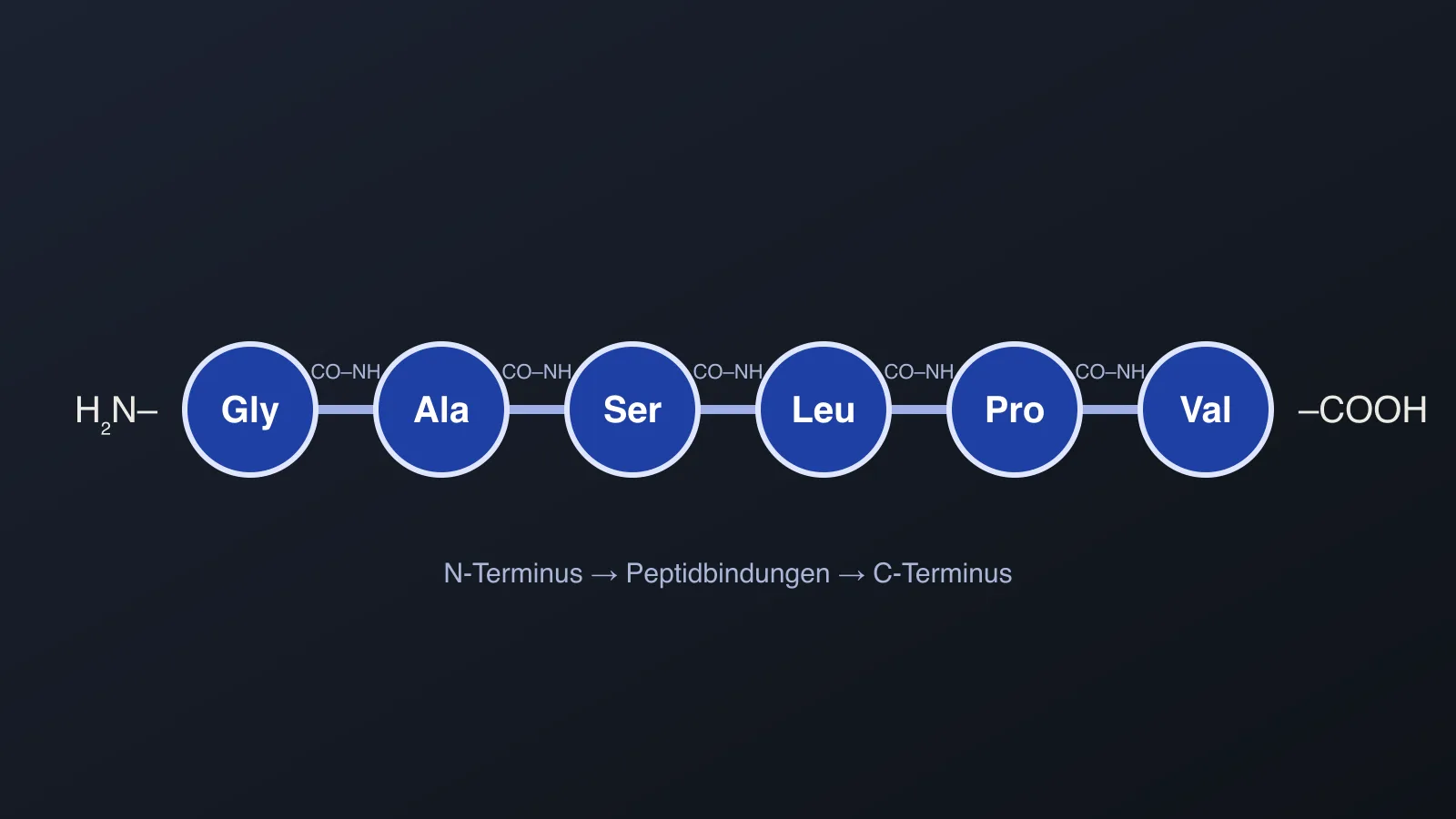
Peptides form when the carboxyl group of one amino acid binds to the amino group of another, releasing a water molecule. This reaction creates a peptide bond.
Depending on the number of amino acids, they are classified as:
- Dipeptides (2 amino acids)
- Tripeptides (3 amino acids)
- Oligopeptides (usually up to around 20 amino acids)
- Polypeptides (longer chains)
Beyond a certain length, the molecules are generally referred to as proteins. The exact boundary is not fixed and varies in the literature.
Why Peptides Matter in Research
Peptides occur widely in nature and perform many different functions. In laboratory research they are commonly used as:
- Reference substances
- Model molecules for structure-activity studies
- Starting materials for further synthetic work
For research purposes, peptides are usually produced by chemical synthesis. This allows precise control over sequence, purity, and modifications.
Key Properties
Peptides differ significantly in their physical and chemical properties. The most important factors include:
- Amino acid sequence
- Chain length
- Presence of modifications (e.g. acetylation, amidation)
- Solubility in water or organic solvents
These properties influence how a peptide is handled, stored, and analysed in the laboratory.
An example: from tripeptide to sequence
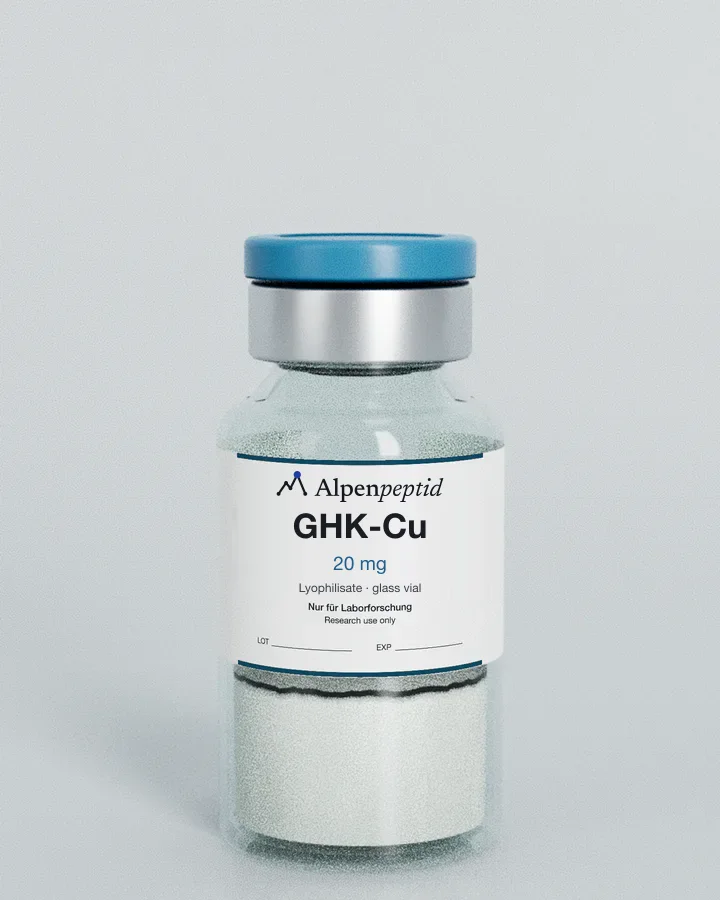
The tripeptide GHK consists of three amino acids: glycine, histidine and lysine. In one-letter code it is written GHK, in three-letter code Gly-His-Lys. It is always read from the N-terminus, with the free amino group, to the C-terminus, with the free carboxyl group. As a copper complex the same molecule is called GHK-Cu.
| Amino acid | Three-letter code | One-letter code | Side chain property |
|---|---|---|---|
| Glycine | Gly | G | Very small, no side chain in the strict sense |
| Histidine | His | H | Can be positively charged depending on pH |
| Lysine | Lys | K | Basic, positively charged at neutral pH |
| Glutamic acid | Glu | E | Acidic, negatively charged at neutral pH |
| Leucine | Leu | L | Hydrophobic |
| Methionine | Met | M | Contains sulphur, sensitive to oxidation |
These few examples already show why the sequence matters so much. Basic and acidic residues set the charge and with it the solubility. Hydrophobic residues can lead to aggregation. Sulphur-containing residues such as methionine or cysteine make a peptide more prone to oxidation.
Primary structure and shape
The order of the amino acids is called the primary structure. Short peptides are usually flexible in solution and take no fixed shape. Longer peptides can form ordered sections, such as an alpha helix. Proteins finally fold into a fixed three-dimensional shape, often further stabilised by disulphide bridges between cysteine residues.
For lab work this means that with short peptides, sequence and charge mainly decide how they behave. With longer peptides, folding and aggregation also come into play.
Peptides, peptide hormones and proteins compared
| Peptide | Peptide hormone | Protein | |
|---|---|---|---|
| Typical length | 2 to about 50 amino acids | Mostly 3 to about 50 amino acids | Mostly over 50 amino acids |
| Structure | Often flexible | Often flexible, partly helical | Fixed three-dimensional fold |
| Examples | GHK, BPC-157 | Oxytocin, GLP-1, GHRH | Albumin, enzymes |
| Made for research by | Chemical synthesis | Chemical synthesis or biotechnology | Mostly biotechnology |
How research peptides are made
Most research peptides are made by solid-phase peptide synthesis. The chain grows one amino acid at a time on a solid resin. Reactive groups are blocked by protecting groups during synthesis. At the end the peptide is cleaved from the resin and the protecting groups are removed.
The crude product contains by-products as well as the target peptide, such as deletion sequences missing one amino acid. Purification follows, usually by preparative HPLC. The peptide is then freeze-dried and filled as a lyophilisate. Mass spectrometry and analytical HPLC show whether the result is right. More on this is in HPLC and mass spectrometry.
Natural and modified peptides
Many research peptides are modified on purpose. Common modifications are:
- N-terminal acetylation: protects against breakdown by aminopeptidases, as in N-acetyl Semax.
- C-terminal amidation: removes a negative charge and occurs in many natural peptide hormones.
- D-amino acids: the mirror image of the natural form, hard for proteases to cleave.
- Lipidation: an attached fatty acid that mediates binding to albumin.
- Metal complexes: such as the copper peptide GHK-Cu.
Every modification changes the molecular mass. So the calculated mass on the certificate of analysis must include the modification. How two related peptides differ in their data is shown in the peptide comparisons. The technical terms are briefly explained in the peptide glossary.
How peptides are handled in the lab
As a dry lyophilisate, most peptides are fairly stable. In solution they break down much faster. Three questions are therefore central in lab practice: how do I store the peptide, what do I dissolve it in, and how much peptide is really in the weighed material? The articles Storing peptides, Dissolving peptides and Peptide content vs purity answer them.
Quality and Documentation
Traceability is essential for scientific work. Reputable suppliers therefore provide a Certificate of Analysis (CoA) for every batch. This document typically includes purity, identity, and other analytical data.
Common questions
Are peptides and proteins the same? No. Both are made of amino acids, but proteins are much longer and fold into a fixed structure. The boundary is usually put at about 50 amino acids.
Why are peptides supplied as a powder? Because they are much more stable dry than in solution. The powder comes from freeze-drying and is called a lyophilisate.
How do I know which peptide I have? From the name, sequence and batch analysis together. A name alone is not enough, because many peptides have several names. More on this in Peptide nomenclature explained.
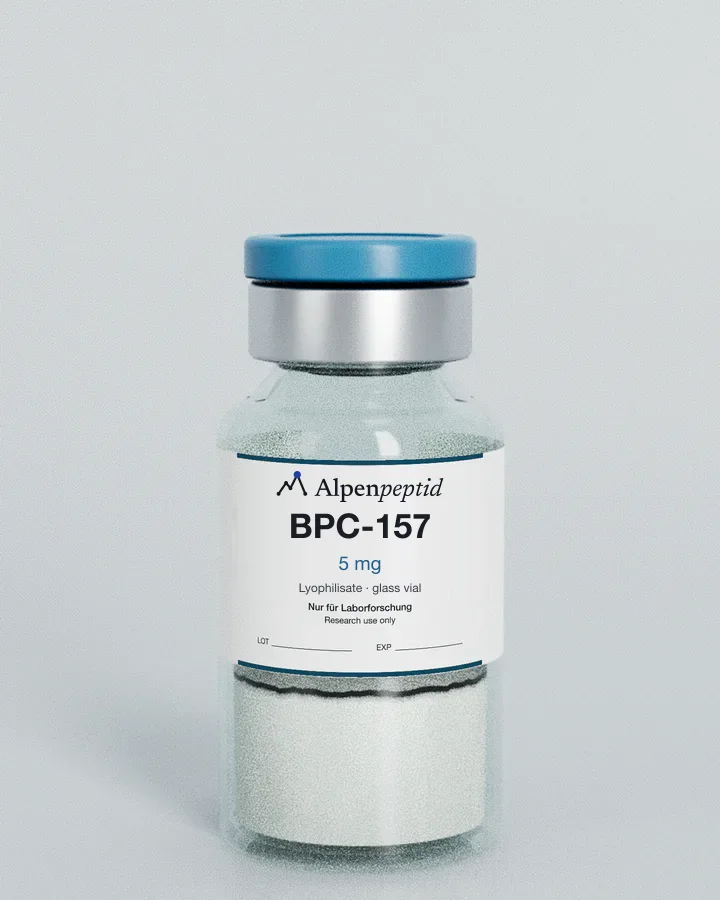
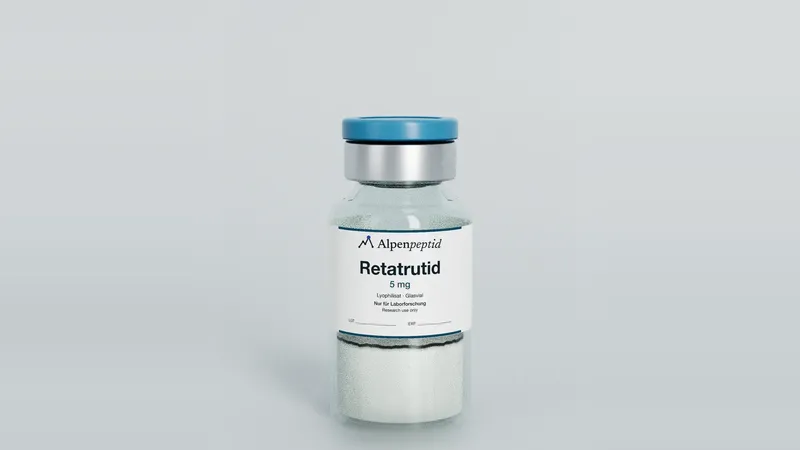
What does “5 mg” on a vial mean? It states the declared amount of lyophilisate. How much of it is pure peptide depends on the peptide content, which is usually below 100% because of counterions and residual water. The lot’s certificate of analysis gives this figure if the peptide content was measured.
Conclusion
Peptides are defined chains of amino acids that serve as versatile tools in research. Anyone working with them should understand the basic chemical principles and the requirements for documentation and purity.
Related pages: Research peptides in the catalogue · Research areas
For laboratory research use only. Not for use in humans or animals.