← Knowledge · Updated 6 November 2026 · 6 min read
In peptide research it is common to encounter several names for the same substance. This can easily lead to confusion, especially with newer research peptides.
Common Types of Names
1. Common / Trivial Name
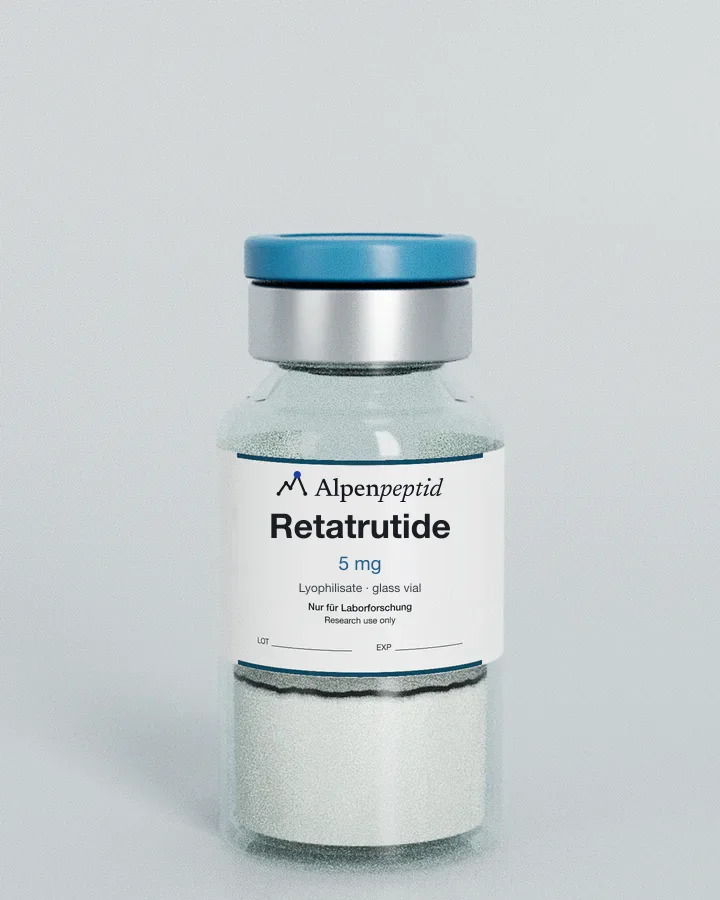
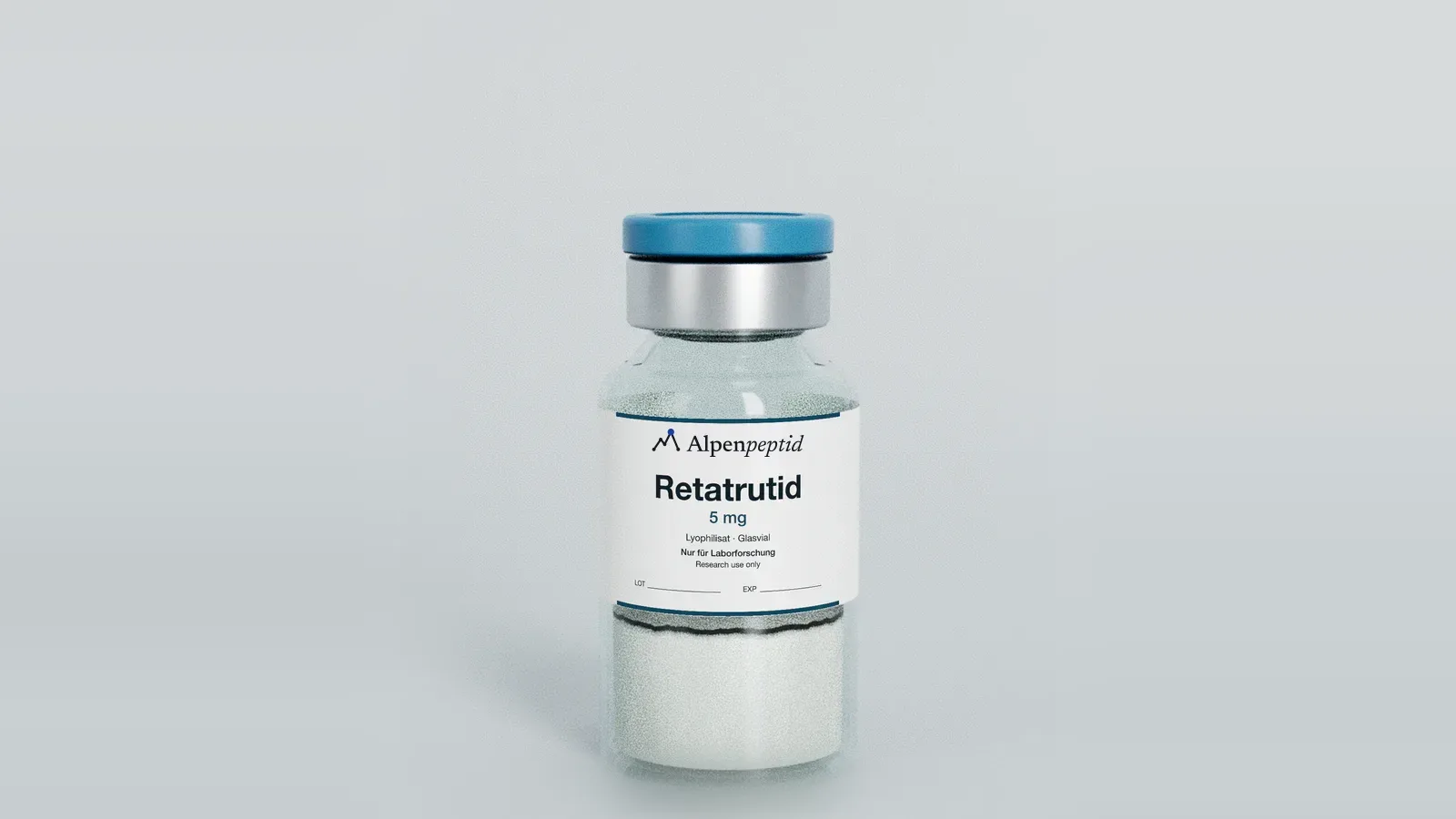
Examples: Retatrutide, Semaglutide, BPC-157. These names are usually memorable and widely used in the scientific community and in trade.
2. Developer or Code Name
Many substances receive internal codes during development, for example LY3437943 for Retatrutide. These codes appear mainly in scientific publications and patents.
3. Systematic / Chemical Name
The IUPAC name describes the exact chemical structure. It is precise but too long and impractical for everyday use.
4. Abbreviations and Informal Short Forms
Examples: “Reta” for Retatrutide or “GHK-Cu” for the copper peptide GHK-Cu. These short forms are common in laboratory practice but are not always unambiguous.
Why Multiple Names Exist
- During the research and development phase an internal code name is often assigned.
- Later an international non-proprietary name (INN) may be granted.
- In trade and laboratory practice, shorter or more memorable names often become established.
- Different manufacturers or distributors sometimes use their own spellings.
The naming levels by example
| Substance | Non-proprietary name | Code name | Other names |
|---|---|---|---|
| Retatrutide | Retatrutide | LY3437943 | Reta, in trade also “Triple G” |
| Tirzepatide | Tirzepatide | LY3298176 | – |
| Semaglutide | Semaglutide | NN9535 | – |
| GHK-Cu | – | – | Copper peptide, Copper Tripeptide-1 in cosmetics |
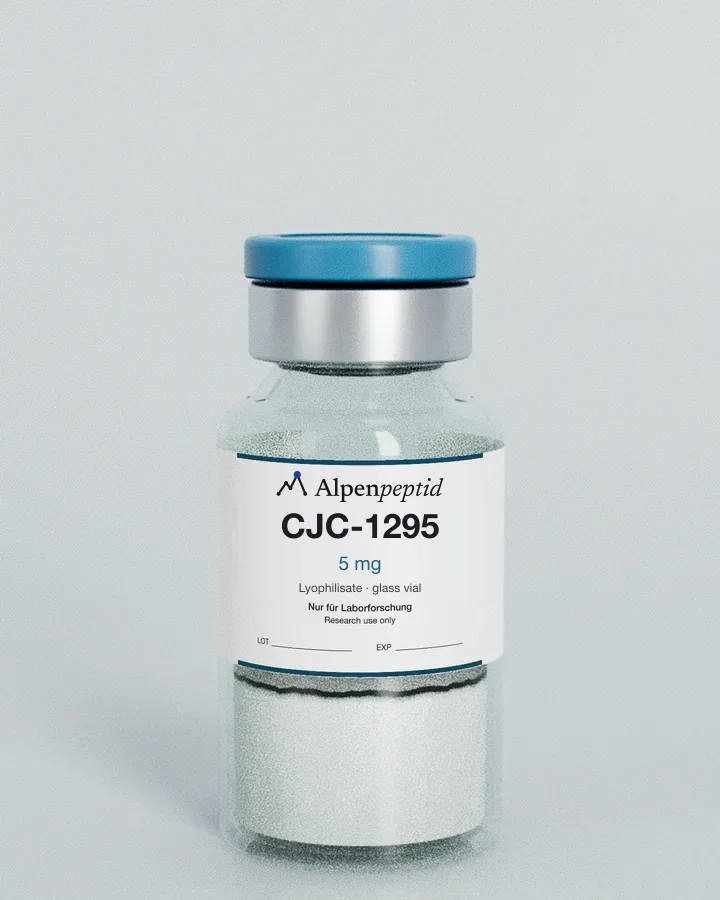
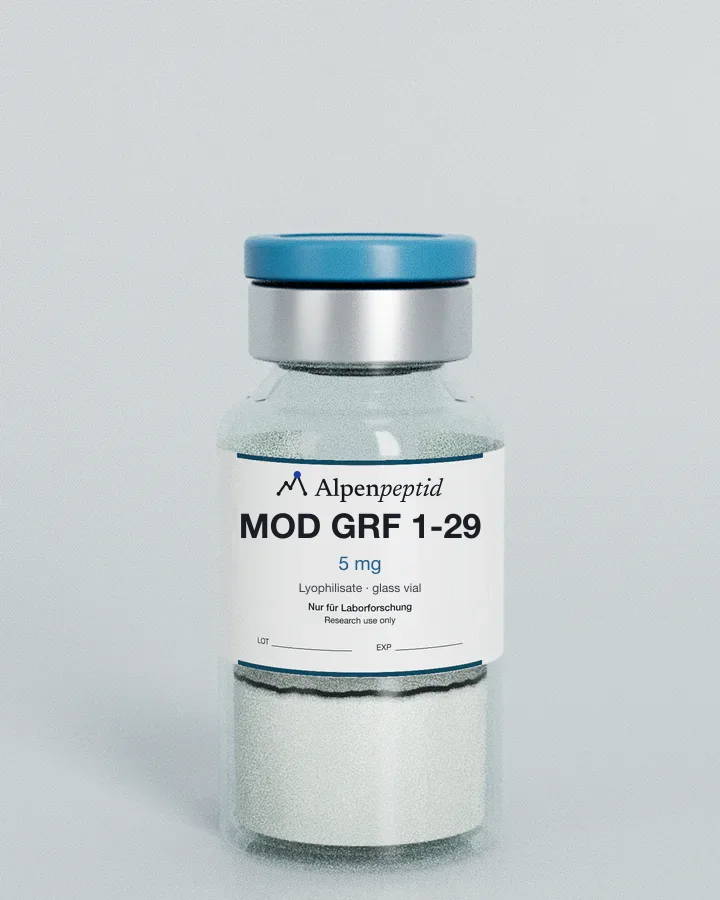
| CJC-1295 without DAC | – | – | Mod GRF 1-29, modified GRF(1-29) |
The table shows that not every substance passes through every level. Many research peptides never received a non-proprietary name and are known only by an abbreviation or a trade name.
German and English spellings
In German, the non-proprietary names of many peptides end in -id, in English in -ide. Retatrutid and retatrutide, semaglutid and semaglutide, or liraglutid and liraglutide each mean the same substance. Epithalon and epitalon are similar: two transliterations of the same tetrapeptide.
For literature searches it pays to use both spellings. English-language databases almost always list the English form. German texts and shops use both.
When similar names mean different substances
The reverse case is more dangerous: two names sound almost the same but describe different molecules.
- CJC-1295 with and without DAC: the DAC version carries an extra group at the C-terminus that binds to albumin. The version without DAC is also called Mod GRF 1-29. Mass and properties differ clearly. The data comparison is in CJC-1295 vs CJC-1295 DAC.
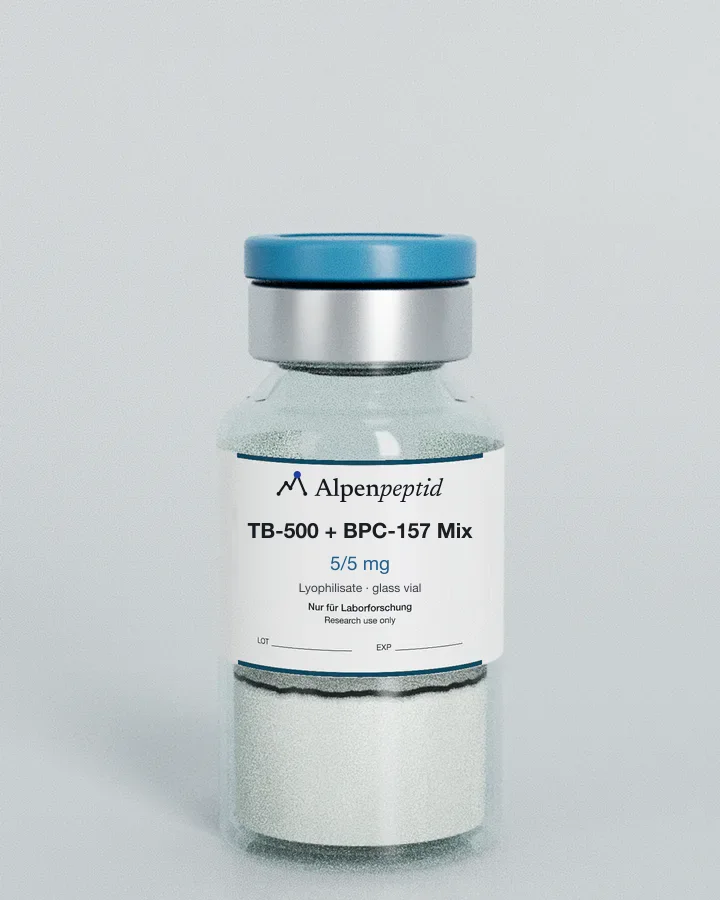
- TB-500 and thymosin beta-4: in trade the names are often treated as the same. TB-500 usually means a short synthetic peptide related to one section of thymosin beta-4, not the full protein.
- Acetylated versions: N-acetyl Semax or N-acetyl epithalon differ from the parent peptide by an acetyl group at the N-terminus, and so by 42 g/mol.
- Informal names: names such as “GLP-3” for retatrutide are trade names with no official basis. They help in searching but do not replace a clear identifier.
INCI names in cosmetics
Peptides in cosmetic formulations have another naming level, the INCI name. It appears on ingredient lists. GHK-Cu is listed there as Copper Tripeptide-1. Matrixyl is listed as Palmitoyl Pentapeptide-4, SNAP-8 as Acetyl Octapeptide-3. Anyone matching cosmetic peptides against research literature needs to know these names.
CAS number and sequence as clear identifiers
The CAS number is assigned by the Chemical Abstracts Service. It is unique to a substance, regardless of language and spelling. Note, though, that different salt forms of a peptide can have their own CAS numbers, such as the free base and the acetate.
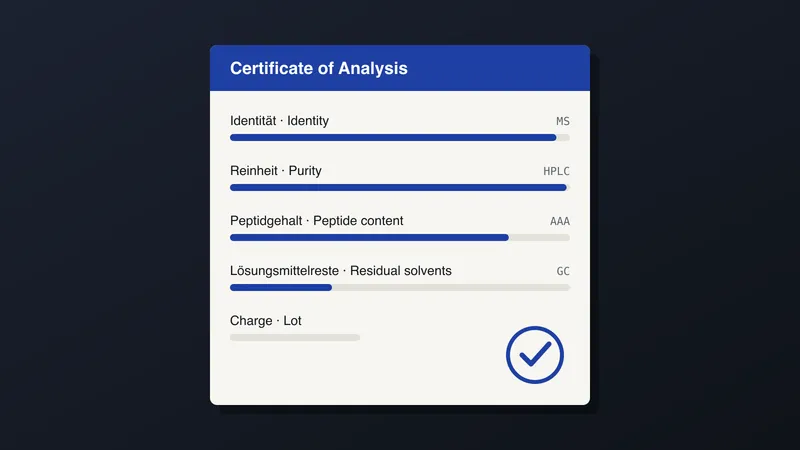
The most reliable identifier is the sequence including all modifications. Together with the calculated molecular mass it can be compared directly with the mass spectrum on the certificate of analysis. How this works is explained in HPLC and mass spectrometry.
Searching databases and literature
A single search term is rarely enough for thorough research. The following approach works well:
- Search PubChem for the most common name. The record lists many other names under “Synonyms” and usually the CAS number too.
- Also search the literature for the code name. Early studies often appear only under the code before a non-proprietary name was assigned.
- Combine German and English spellings, such as “Retatrutid OR Retatrutide OR LY3437943”.
- Check hits against sequence or molecular mass before they go into your review.
Recording names in the lab notebook
Record not just the trade name in the lab notebook, but also the sequence, salt form, supplier and lot number. That keeps an experiment traceable even when names change in trade or another supplier uses a different spelling. This record is essential for comparing lots.
Practical Approach
When ordering research peptides or reviewing literature, always check:
- Which name appears on the CoA
- Whether the sequence or CAS number is provided
- Whether different names actually refer to the same substance
The combination of name + sequence + batch analytics offers the highest level of certainty.
How Alpenpeptid gives names
Every product page lists the common other names and spellings under “Also known as”. Where a source is clear, the sequence, molecular formula, molecular mass and CAS number are given too, with a reference to PubChem. The catalogue search finds a product under its other names as well, such as retatrutide under “LY3437943”. Technical terms are explained in the peptide glossary.
Common questions
Is retatrutide the same as retatrutid? Yes. Retatrutide is the English and retatrutid the German spelling of the same substance, with the code name LY3437943.
How can I tell whether two shops sell the same peptide? Compare sequence, molecular mass and, where given, the CAS number, not just the name. Watch for additions such as “DAC”, “acetyl” or “amidate”.
Why does the certificate use a different name from the shop? Labs often use the non-proprietary name or the sequence, while shops tend to use the trade name. What matters is that sequence, mass and lot number match.
Does a CAS number also cover the salt in the vial? Not always. Many records refer to the free form of the peptide. The lyophilisate supplied is usually an acetate or trifluoroacetate salt. Which form it is appears on the certificate of analysis.
Conclusion
Multiple names for the same substance are normal in peptide research. Understanding the different naming levels and paying attention to sequence and analytical data helps maintain clarity.
Related pages: Retatrutide · Research peptides in the catalogue
For laboratory research use only. Not for use in humans or animals.