← Knowledge · Updated 6 November 2026 · 5 min read
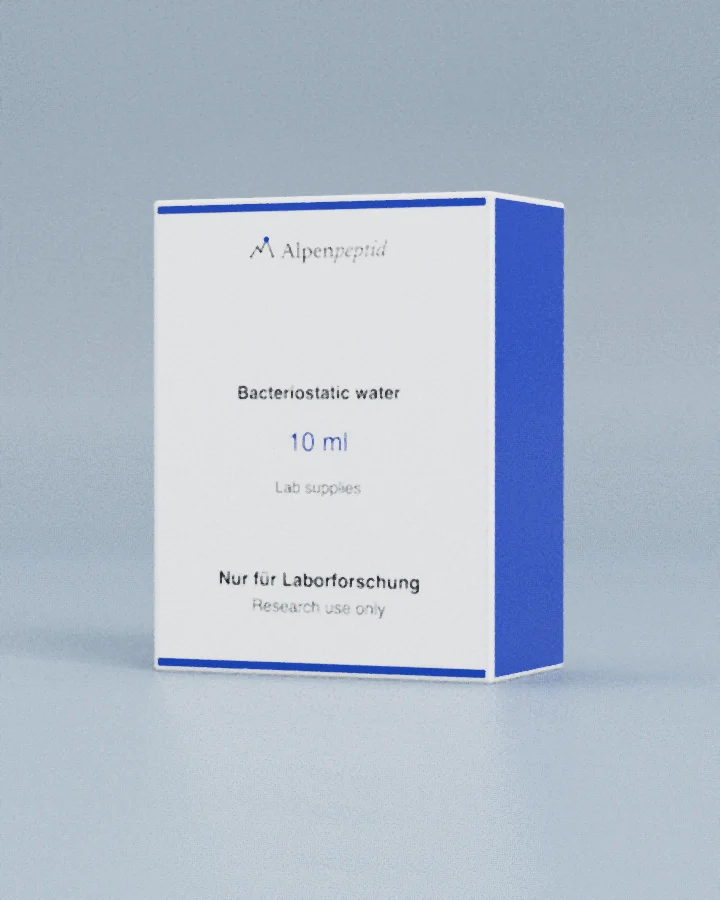
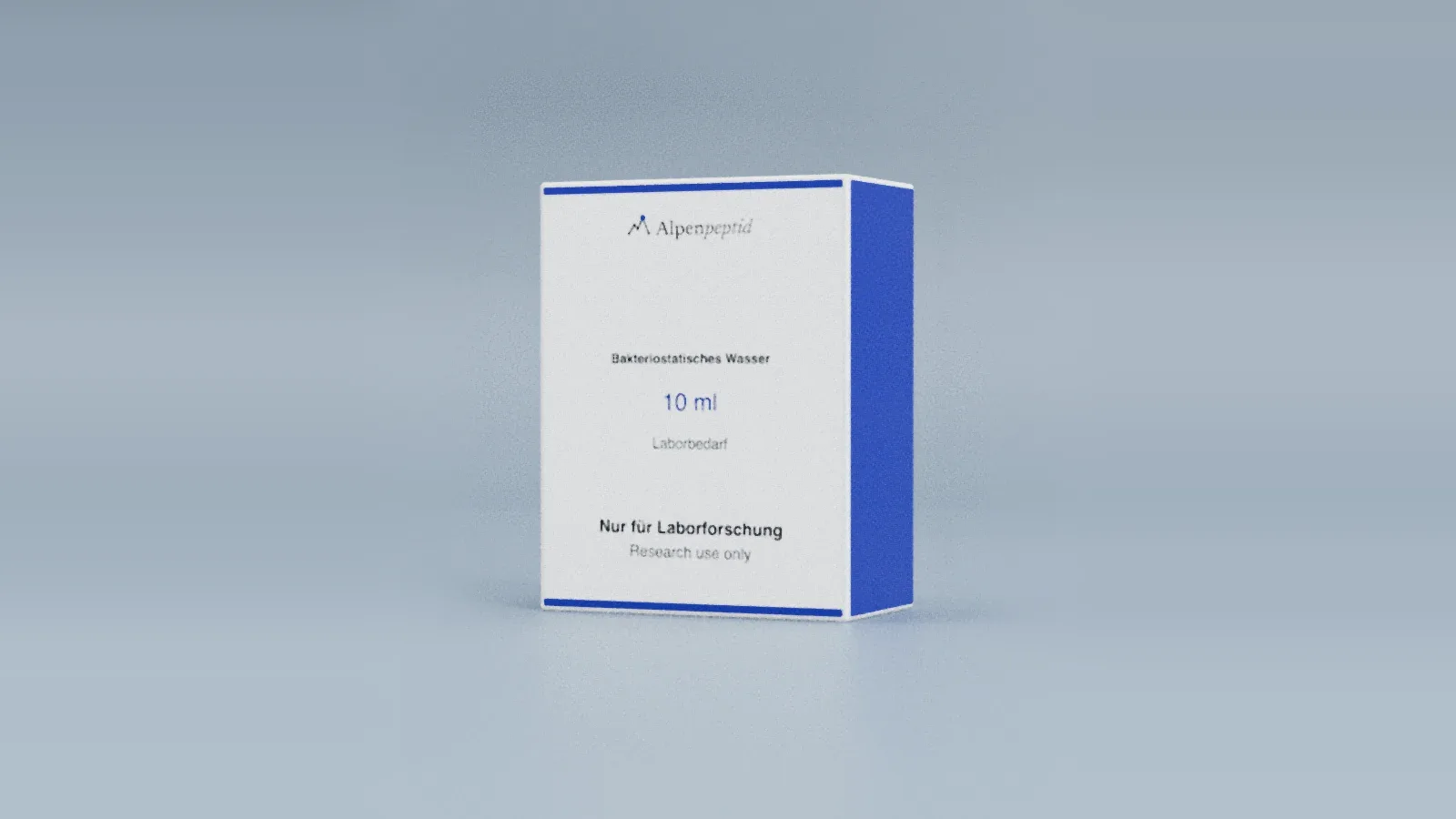
Bacteriostatic water (often called BAC Water) is water that contains an added preservative to inhibit bacterial growth. In the laboratory it is primarily used as a solvent and diluent.
Composition
Typical bacteriostatic water contains:
- Sterile water
- A bacteriostatic agent (commonly 0.9% benzyl alcohol)
The additive prevents or slows the growth of microorganisms after the ampoule or vial is first opened.
Bacteriostatic, sterile, pure: the differences
In the lab you will meet several grades of water. They are not interchangeable.
| Water grade | Properties | Typical use |
|---|---|---|
| Bacteriostatic water | Sterile, with 0.9% benzyl alcohol, for repeated withdrawal | Solutions drawn from the same container over some time |
| Sterile water | Germ-free, no additive, for single withdrawal | Preparations used straight away, or experiments sensitive to benzyl alcohol |
| Ultrapure water (type 1) | Very low ions and organics, not necessarily sterile | Analysis, HPLC mobile phases, buffer preparation |
| Distilled or deionised water | Desalted, not sterile | Rinsing, general lab work |
The key difference is withdrawal. Sterile water without an additive is not protected against germs once opened. Bacteriostatic water inhibits the growth of bacteria that get in, which is why it suits containers drawn from several times.
How benzyl alcohol works
Benzyl alcohol is bacteriostatic, not bactericidal. It inhibits the growth of bacteria but does not reliably kill them. A solution that is already contaminated does not become sterile again because of the additive. Clean technique therefore remains essential, even though the water is preserved.
Typical Laboratory Uses
Bacteriostatic water is used, among other things, for:
- Reconstituting lyophilised substances
- Diluting samples
- Preparing working solutions
It often replaces sterile water when a longer usability after opening is desired.
When bacteriostatic water is not the right choice
- Cell experiments: benzyl alcohol can interfere in sensitive cell cultures. Sterile water without an additive or a suitable buffer is the better choice there.
- Poorly soluble peptides: mostly acidic, basic or hydrophobic peptides often dissolve poorly in plain water. Dilute acid, base or an organic solvent helps then. The approach is described in Dissolving peptides.
- Analysis: benzyl alcohol absorbs UV light and shows as its own peak in an HPLC chromatogram. Ultrapure water suits analytical samples better.
- Sensitive proteins: with some proteins and longer peptides, benzyl alcohol can promote aggregation. If a solution turns cloudy after dissolving, change the solvent.
Clean technique with multi-use containers
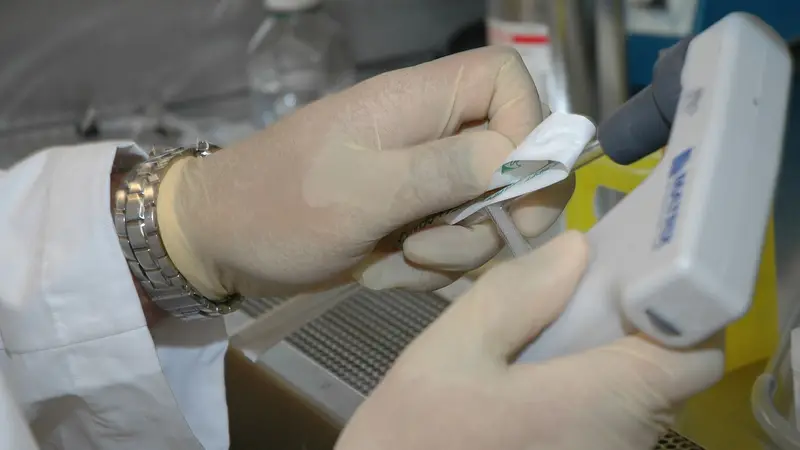
- Wipe the rubber stopper with an alcohol swab before each withdrawal and let it dry.
- Use a new sterile syringe and needle for each withdrawal, such as 1 ml lab syringes.
- Do not touch the stopper and do not leave the container open.
- Write the date of first withdrawal on the label.
- Keep to the in-use period after opening stated by the manufacturer. Many manufacturers give 28 days for multi-use containers.
pH and buffering
Bacteriostatic water is slightly acidic to neutral, typically with a pH between about 4.5 and 7. It is not a buffer. When a peptide salt is dissolved in it, the counterion mainly sets the pH of the finished solution, for example a trifluoroacetate, which acidifies it. For experiments that need a specific pH, the solution is therefore adjusted or diluted with a suitable buffer afterwards.
Many peptides are more stable in slightly acidic solution than at basic pH, because deamidation and other degradation routes run more slowly there. This often favours water or weakly acidic solutions as the first solvent.
Planning container size and use
Before buying, work out how much water you will really need within the in-use period after opening. A large container of which two thirds are discarded after four weeks costs more than several small ones. It is often better to make up a peptide solution once and freeze it in aliquots than to keep the water open for weeks.
Documenting the solvent
Record the lot and opening date of the water in the lab notebook as well, not only those of the peptide. If an experiment deviates unexpectedly, you can then check whether the solvent could be the cause.
What to Look for When Buying
- Sterility and production according to pharmaceutical or laboratory-grade standards
- Clear statement of the exact composition
- Suitable container size for the intended use
- Shelf-life information after opening
Also look for an expiry date and a lot number on the label. The container should have a stopper that tolerates repeated piercing. A smaller container is often more economical, because the contents can only be used for a limited time after opening.
Storage and Handling
Even bacteriostatic water should be stored cool, dry, and protected from light. After opening, the manufacturer’s stated period of use should be observed.
| State | Note |
|---|---|
| Unopened | Until the expiry date on the label, stored as the manufacturer states |
| Opened | In-use period per the manufacturer, note the date of first withdrawal |
| Cloudiness, particles, discolouration | Do not use any more |
A finished peptide solution usually keeps for much less time than the water itself. How to store solutions is shown in Storing peptides.
Common questions
Is BAC water the same as sterile water? No. Both are sterile, but BAC water contains 0.9% benzyl alcohol as a preservative. Sterile water without an additive is meant for single withdrawal.
Can I make bacteriostatic water myself? For reproducible lab work this is not advisable. Sterility and the exact concentration of the additive can’t be ensured without suitable equipment.
How do I know a container is no longer usable? From cloudiness, particles or discolouration, a passed expiry date, or an in-use period after first opening that has run out.
Bacteriostatic water at Alpenpeptid
Under Lab supplies you will find bacteriostatic water and sterile water, along with alcohol swabs, lab syringes and a storage box for vials. Terms such as benzyl alcohol, aliquot or reconstitution are explained in the peptide glossary.
Conclusion
Bacteriostatic water is a practical laboratory aid when dissolved substances need to remain usable for a longer period. Quality and clear labelling are essential when purchasing.
Related pages: Bacteriostatic water (BAC water) · Laboratory supplies
For laboratory research use only. Not for use in humans or animals.